
46. Elderflower and Polenta Cake
A rustic Italian recipe adapted for an English summer

My trip to Italy begins to feel more and more like a distant dream as obligations to adulthood and reality eat away at my time; such is life. This means I haven’t yet had an opportunity to write up the rest of my travel diary (but I will). Instead, I’ve been distracted, travelling around and making delicious things, including this elderflower and polenta cake.
I hear my friend Louis Thompson has written another incredible piece for Nicola Lamb’s Kitchen Projects (out today), this time all about elderflower. Perfect synchronicity. Give it a read.
Much love,
Cissy … xo
Elderflower and Polenta Cake
Italy’s cooking is profoundly shaped by regionality in a way few other countries’ cuisines are. Each region retains a fierce culinary identity, shaped by politics, climate and geography. On my travels, I saw this on restaurant menus, in pasticcerie display cabinets, and in market stalls as I moved from North to South.
In the North, sweet treats are rich, comforting and influenced by the Alpine climate: heavy on butter, made with the world’s best hazelnuts, and laden with liqueurs and wines. (See my Chocolate Baci di Dama recipe.)
It’s no surprise, then, that I fell in love with it.
Back in England, and desperate to cling onto my trip for just a little longer, I bought a heap of secondhand cookbooks, among them Classic Food of Northern Italy by Anna del Conte. Flicking through its pages, neatly divided by region, I came across a recipe for pan di miglio, or millet bread.
The recipe originates from Lombardy, a region made up of nine provinces, including Milan - somewhere I didn’t properly venture into, despite passing straight through it by train as I snaked from Turin to Bologna via Milan. In hindsight, this now feels like a regrettable decision, but we are where we are.
The flavours and ingredients of the recipe felt unexpectedly British and, with elderflower season in full swing, it felt only right to give this recipe a go.
Traditionally, pan di miglio is baked for St George’s Day on the 23rd April (the patron saint of dairy farmers). Historically made with millet flour (though nowadays more commonly with polenta) and fresh elderflowers, the dough is shaped into small round buns that take on a rich yellow hue during baking. The finished buns are then dipped into cream before eating.
I’m still not entirely sure whether these sit more comfortably in the camp of sweet bread, biscuit or cake, perhaps somewhere between all three.
I’ve adapted the original recipe, as I found the traditional version quite gritty and dense. I wanted to nudge it towards something a little softer while still preserving its rustic character, mainly by incorporating a small amount of oil and soaking the polenta. I was also keen to keep this recipe true to its simple roots, requiring no special equipment or elaborate technique. That means there’s very little aeration, no creaming butter and sugar, no whisking to ribbon stage, but it still feels like a light, fluffy sponge. Expect something perfect to eat alongside a cup of coffee in the morning.
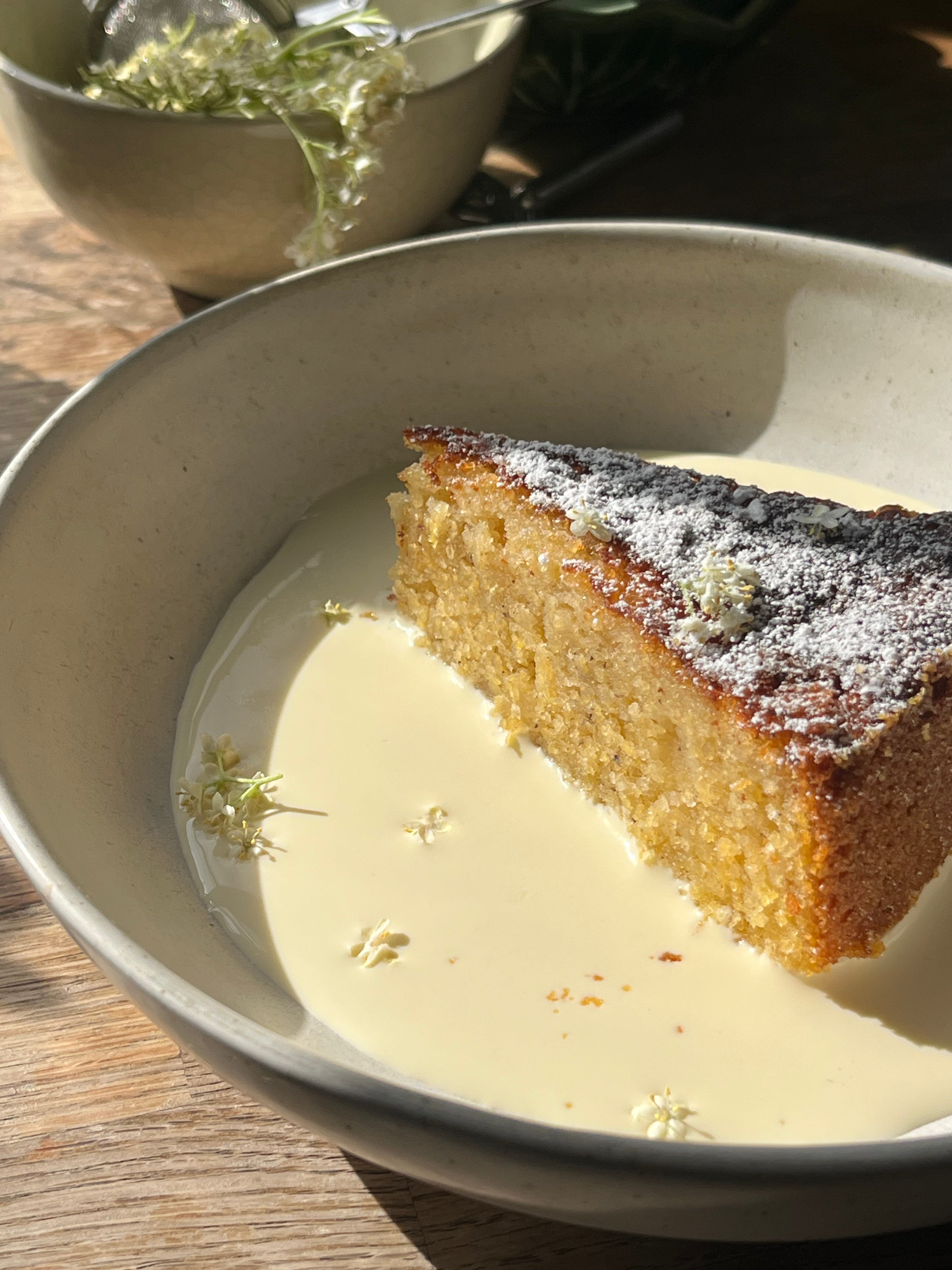
Elderflower and Polenta Cake Recipe
Serves 8
Keep reading with a 7-day free trial
Subscribe to Roll with it to keep reading this post and get 7 days of free access to the full post archives.