
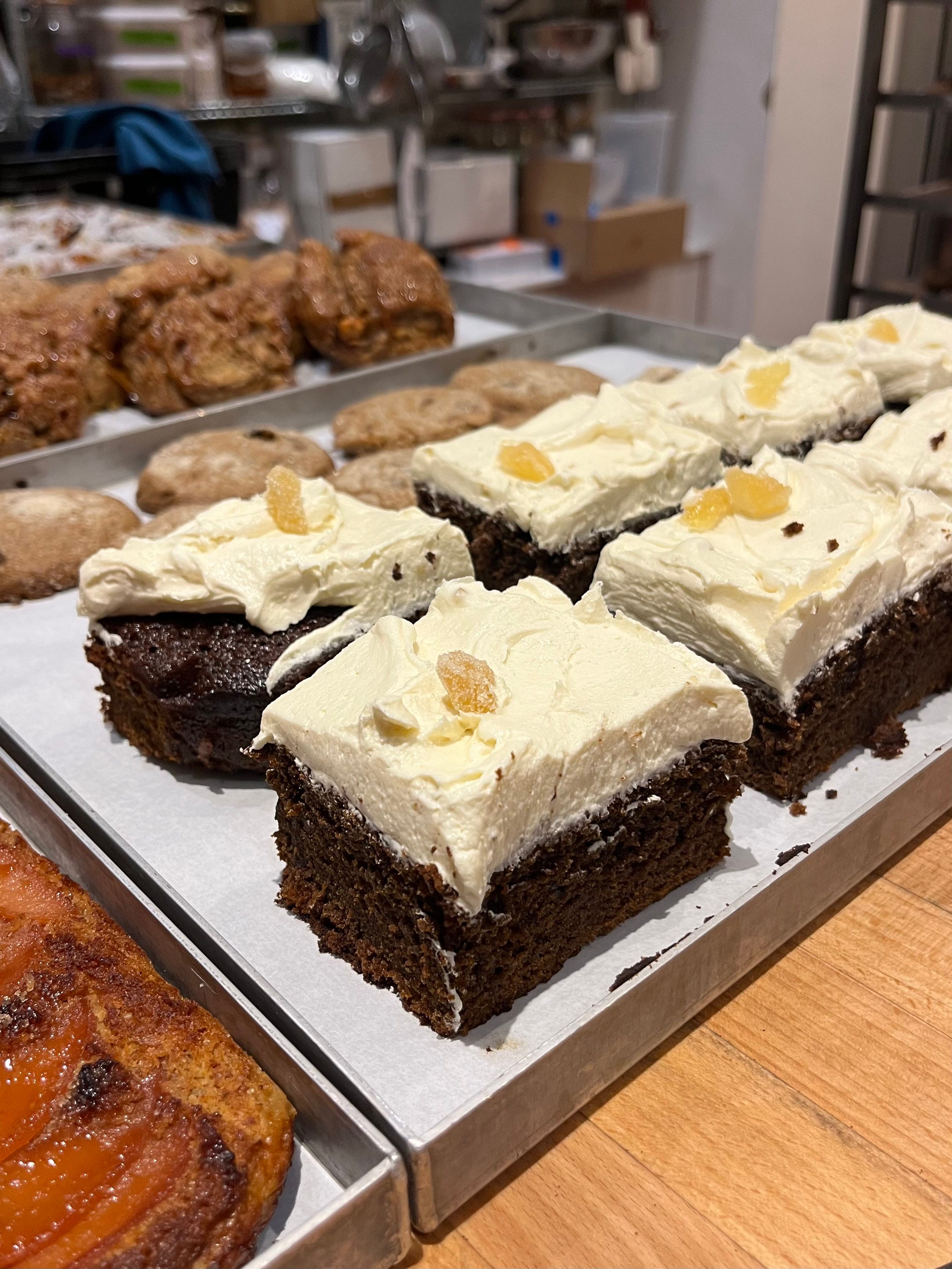
20. Ginger Treacle Cake
and how things don't always go to plan.

Hello,
Welcome back to another edition of the newsletter, it’s great to have you here!
Baking isn’t always perfect. It might seem this way but trust me, it isn’t. On any given day of recipe testing or working in a bakery you are inevitably going to encounter a stroke of bad baking luck, which at worst is going to make you feel a bit deflated for a short period of time, but at best make you more resilient and more knowledgeable. This month some of my imperfect bakes have included (but not limited to) forgetting to add 1kg of flour to a large batch of scones, watching a large pool of bright orange pumpkin custard flow out from the bottom of a tart shell as I pushed it into the oven, seeing a large fracture form down the middle of said silky custard tart as it cooled, as well as waiting patiently for a ginger treacle pudding to steam, only to find it was inedible.
This last bake is in fact the catalyst for this gingerbread recipe below and the whole reason for me divulging in my baking mishaps.
Much Love,
Cissy…xo
It all started a few weeks ago when a friend asked if I could share a steamed sponge recipe with him. At that moment the only recipe I could share was a pumpkin, maple and pecan steamed sponge that I had developed for Nicola Lamb’s Kitchen Projects and I don’t think it quite fit the bill. So I decided I’d write one, as I thought it would be a perfect pud for these colder, darker days. I turned to the likes of St John and Jane Grigson for some quintessentially British inspiration but knew I wanted to use rich ingredients like ginger, treacle, golden syrup and nutmeg and serve it with a thick school dinner type custard. It just so happened that at Quince Bakery (where I work) Anna had added the most delicious malt flour gingerbread cake to the menu that week (her version of Nigella’s classic chocolate gingerbread). Each day as it baked, warm, spicy autumnal aromas filled the bakery and had us all fighting for leftover scraps. All I could think was how equally delicious it would be as a steamed sponge. I imagined treacle cascading down the basin as I turned the pudding out onto a plate and fiery nuggets of candied ginger in each bite.
At home, I gathered my ingredients and began making my pudding. I carefully wrote out each gram of ingredient in my notebook and steamed the sponge for about two hours. After patiently waiting, I turned the pudding out, hoping for that treacle waterfall. Instead, only steam cascaded off it. I cut a slice and took a bite. My excitement quickly turned into disappointment. The ginger was so ferocious that it didn’t just make you wince, it made you want to spit it out. As you would be, I was a little frustrated. I thought, ‘all that work, time and money for nothing’. I dabbled with the idea of making it again but I honestly couldn’t bear sitting around for another two hours waiting for another pudding to steam. So I despondently let the idea die.
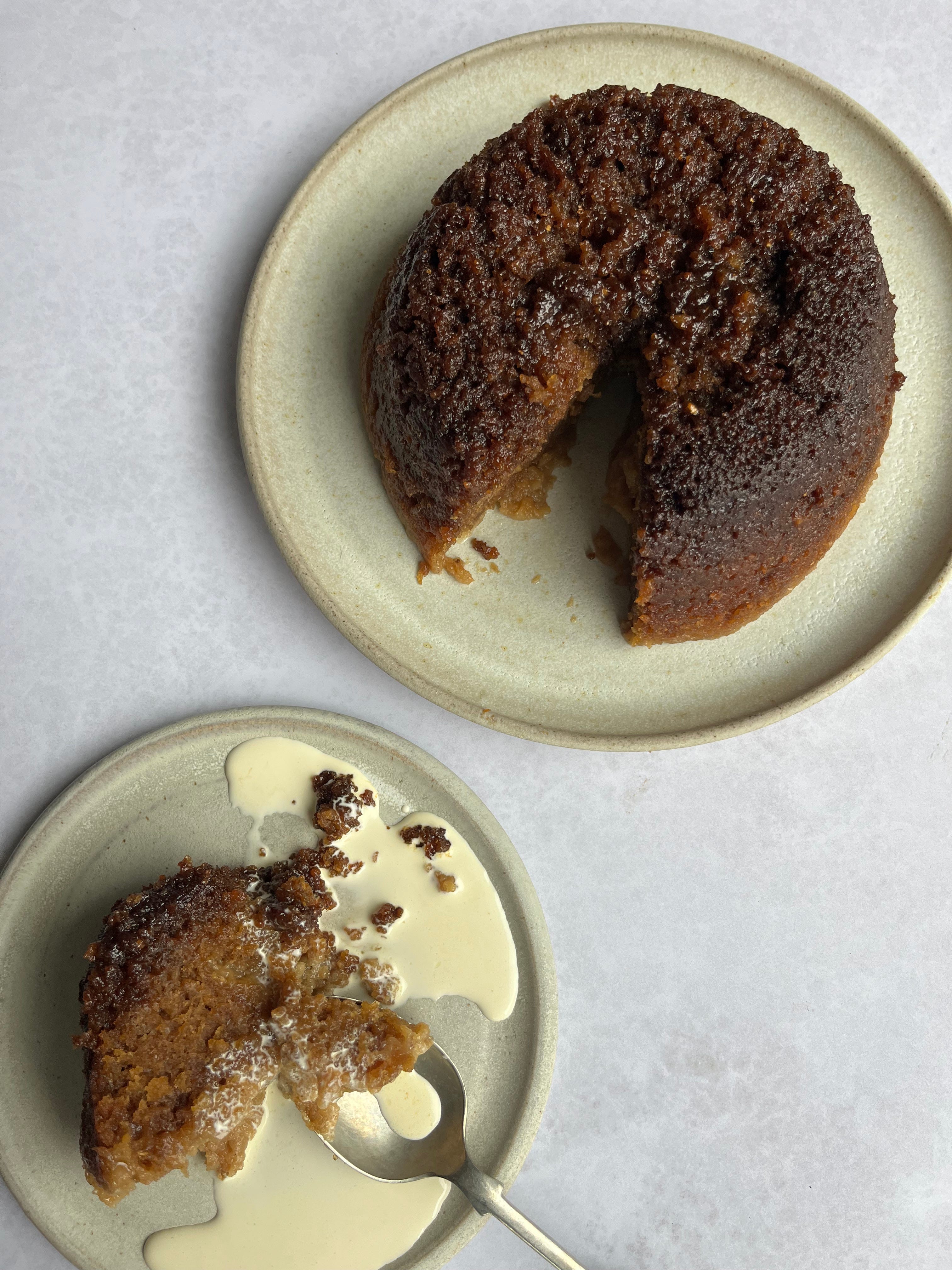
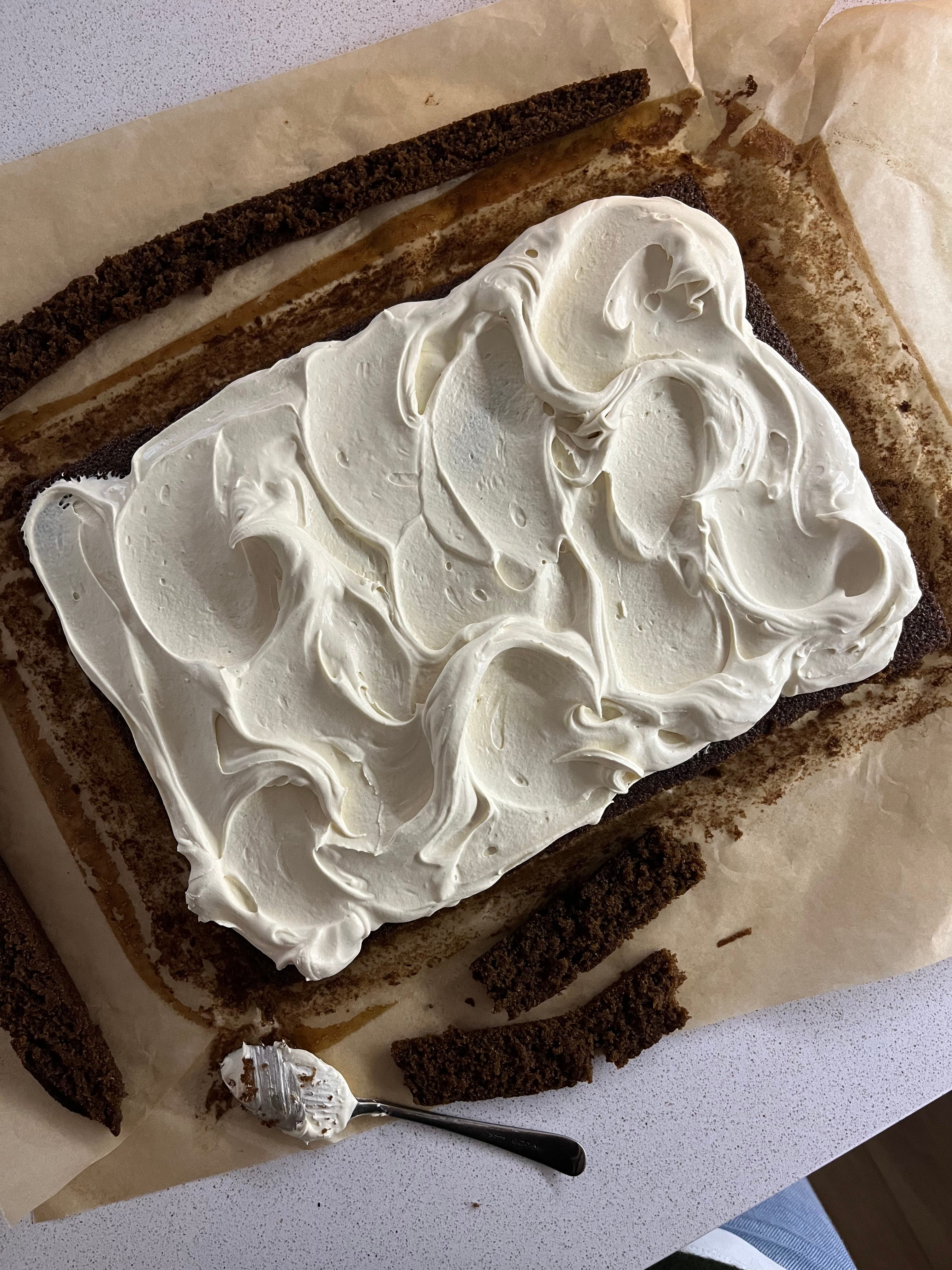
A few days later the pudding reappeared in my consciousness like a bad dream. I would not be defeated! So instead of painstakingly waiting 2 hours to see if a decreased amount of ginger would make it edible (which it more than likely would) I thought I’d make my life more simple. Taking inspiration from Anna, Nigella and my own baking fails, I made an oil and water based cake, in the hopes I might mimic that steamed sponge texture I was after but without all the faff. The cake did eventually turn out as I hoped - light and fluffy. Perhaps not quite the same sticky, moreish texture that you get when you steam a sponge but no less delicious.
Recipe testing doesn’t always go to plan, but what in life really does? Without these baking mishaps, I wouldn’t have learnt that my gut is almost always right (something I often forget), cracks that form in baked custard tarts are usually because they’ve been baked in an oven that is too hot, dissolving bicarbonate of soda in warm water helps it mix into other ingredients better as it’s water soluble, taste your batter before you steam it for 2 hours, everything is almost always salvageable with freshly whipped cream.
Ginger Treacle Cake Recipe
Serves 8
Ingredients
For the cake
50g fresh ginger, peeled and finely diced
100ml hot water
250g plain flour
¼ tsp freshly ground black pepper (fine not coarse)
¼ tsp ground nutmeg
2 tsp ground ginger
Big pinch of salt
150g dark brown sugar
220g treacle
150g olive oil (or neutral oil)
2 eggs
1 tsp bicarbonate of soda
100ml warm water
For the icing
250ml double cream
10g dark brown sugar
1 tsp ground ginger
A big pinch of flaky sea salt
Equipment
Deep baking tray (30 x 20 x 5cm)
Blender
Whisk
Method
Preheat the oven to 160c fan.
Use a spoon to peel the skin off the ginger.
Finely dice the peeled ginger and add to a blender with 100ml of hot water. Blend until smooth. (I used a stick blender).
In a bowl or measuring jug, whisk together the dark brown sugar, treacle, olive oil, salt, eggs and blended ginger.
Dissolve the bicarbonate of soda with 100 ml of warm water and add this to the wet ingredients.
In a separate bowl, combine the flour, black pepper, ground nutmeg and ground ginger.
Make a well in the centre of the dry ingredients and pour in the liquid ingredients, whisking until well combined.
Pour the batter into the lined tray and bake for 20-25 mins, or until firm to touch. (It should have a little bounce).
Remove from the oven and leave to cool.
Once cool make the cream icing.
Combine all ingredients in a large bowl and whisk to soft peaks.
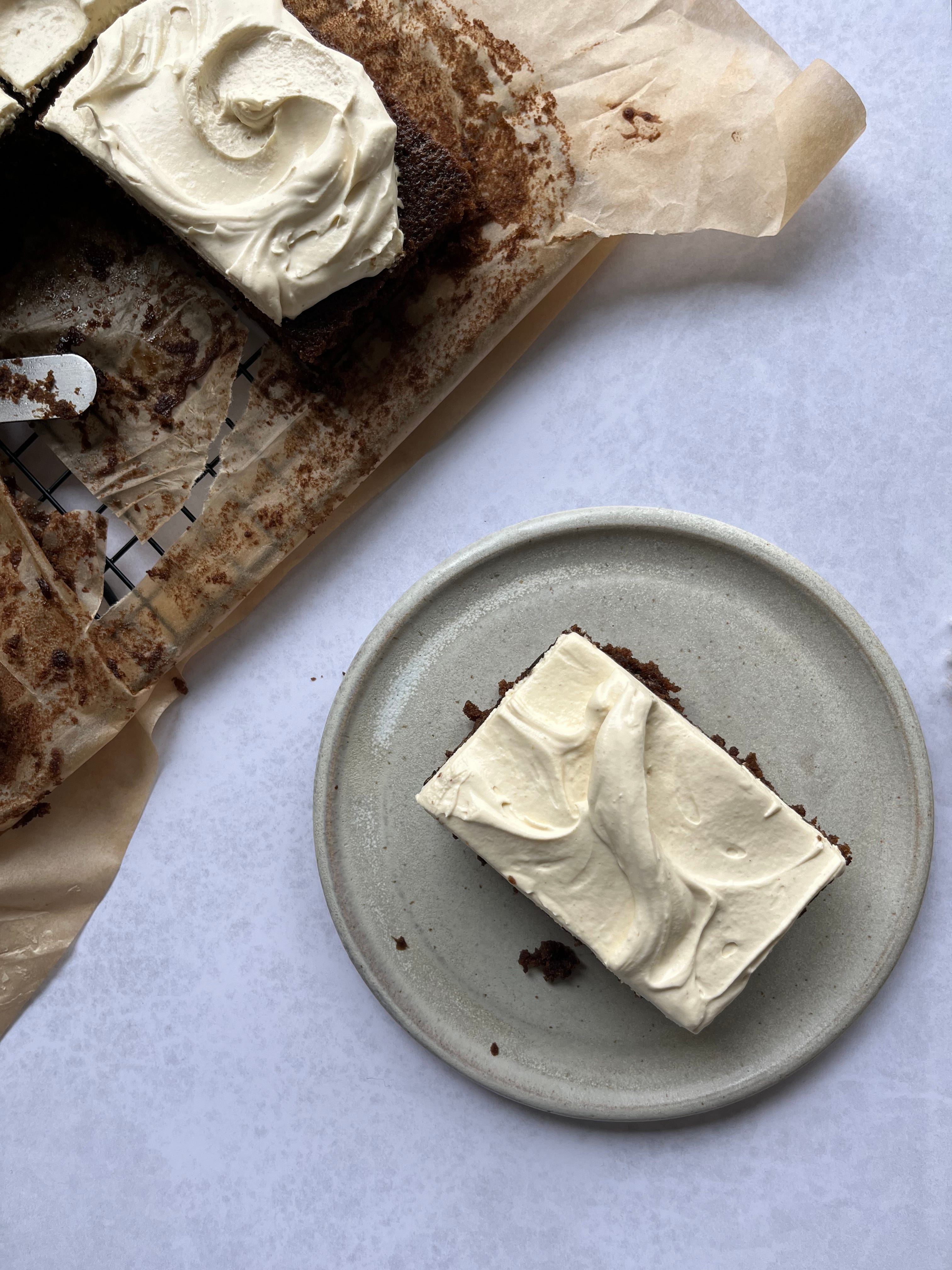
Spread over the cooled gingerbread with the back of a spoon or palette knife.
Trim the edges (chef’s treat), then slice the cake into 8 equal pieces (2x4).
Notes
This makes a thin sheet cake. If you would prefer a more voluminous cake you could double the recipe and bake for an additional 5 - 10 mins.
Links and Inspiration
Quince Bakery Malt Flour Gingerbread with ginger crème fraîche buttercream
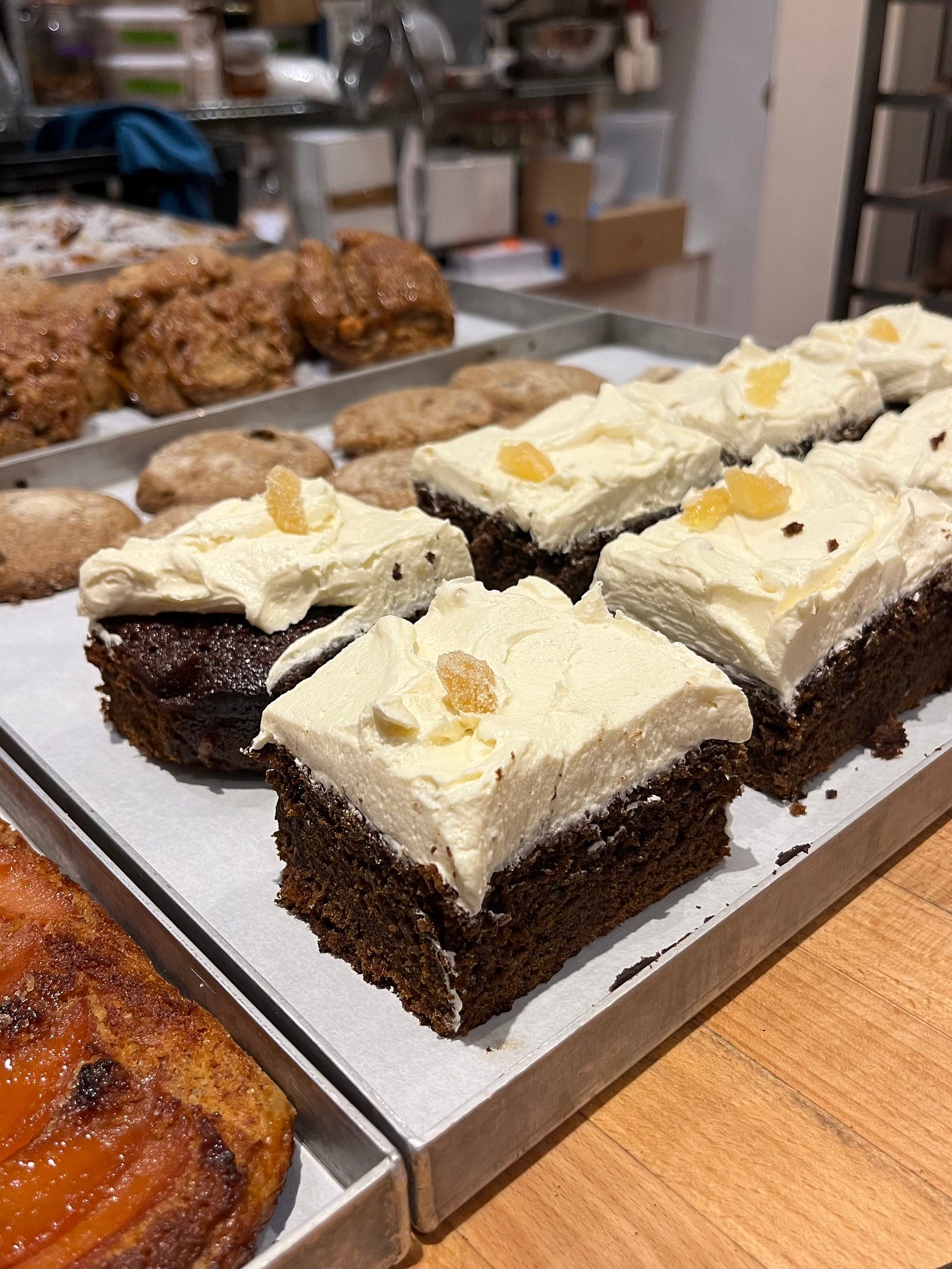
Quince Bakery Gingerbread
Now wishing I’d got some quince gingerbread too but I’ll try making this! I have only a 9” tin which I think should be roughly the same size?